


Choosing Floor and Wall Tiles That Complement Your Interior Design, Furniture, and the Best Living Room Tiles Design
- Before Choosing Tiles, Understand One Simple Truth About Interiors
- Why Tiles Influence the Overall Interior More Than Most People Realise
- Understanding the Advantages and Limitations of Vitrified Tiles, Ceramic Tiles, and Porcelain Tiles
- The Three Interior Elements Tiles Must Work With
- Floor Tiles and Wall Tiles Should Not Compete for Attention
- How Tile Size Affects Interior Balance
- Relationships Between Tile Colour and Furniture
- The Role of Texture in Interior Design
- Designing the Best Living Room Tiles Design with Balance
- Bringing It All Together with Tree Tile: Designing Interiors That Feel Complete and Connected
- The Tile Decision Test: A 10 Second Check Before You Finalize Your Space
Designing a balanced interior begins with choosing materials that work naturally with the space, furniture, and overall style of the home. Tree Tile, an Indian tile manufacturer recognized by the Government of India as a 1 Star Exporter, approaches this idea with a focus on thoughtful design, reliable manufacturing, and practical usability. With experience in developing floor and wall tiles that suit modern interiors, Tree Tile’s perspective goes beyond simple surface choices; it focuses on how tiles can complement interior design, furniture arrangements, and the best living room tiles design, helping create spaces that feel cohesive, comfortable, and visually well connected.
Before Choosing Tiles, Understand One Simple Truth About Interiors
Interior design is never created by a single element alone. A well designed space is the result of several parts working together; floor surfaces, wall finishes, furniture, lighting, and the proportions of the room. Each of these elements contributes to the overall atmosphere and comfort of an interior.
Among these elements, tiles often form the quiet foundation of the space. Floor and wall tiles cover large areas and influence how furniture stands in the room, how light reflects across surfaces, and how the entire interior feels visually connected. When tiles are chosen to match the interior thoughtfully, the space begins to feel balanced, intentional, and harmonious rather than random or mismatched.
Why Tiles Influence the Overall Interior More Than Most People Realise
In most interiors, tiles cover some of the largest continuous surfaces in a room. They appear across floors, full wall sections, kitchen backsplashes, and bathroom walls, making them one of the most visible and permanent materials in a space. Because of this wide coverage, the choice of tiles quietly influences how the entire interior looks and feels.
The color, texture, and size of tiles can change the visual character of a room. Light toned tiles often make spaces feel more open and airy, while darker tones tend to anchor the room and create a grounded atmosphere. Larger tile formats reduce visible grout lines, giving floors and walls a cleaner and more continuous appearance. At the same time, textured surfaces can introduce subtle depth and visual interest, helping interiors feel more layered and thoughtfully designed.
Understanding the Advantages and Limitations of Vitrified Tiles, Ceramic Tiles, and Porcelain Tiles
| Feature | Ceramic Tiles | Porcelain Tiles | Vitrified Tiles |
|---|---|---|---|
| Basic Material Composition | Made from natural clay and minerals, fired in a kiln at moderate temperatures | Made from refined clay and minerals, fired at higher temperatures to create a denser tile | Made by mixing clay with silica, quartz, and feldspar and then vitrified at very high temperatures |
| Density and Strength | Moderate density and strength suitable for lighter interior applications | Higher density than ceramic, making the tiles stronger and more durable | Very dense and compact structure due to the vitrification process |
| Common Interior Uses | Kitchen walls, bathroom walls, decorative wall applications, light traffic flooring | Living rooms, bathrooms, kitchens, balconies, and commercial floors | Living rooms, large interior floors, commercial areas, and high traffic spaces |
| Design Variety | Available in many colors, prints, and decorative patterns | Available in modern designs including stone look and marble look finishes | Often produced in large formats with polished, matte, or structured surfaces |
| Durability in Daily Use | Suitable for normal residential use where heavy wear is not expected | Designed for stronger performance in areas with regular foot traffic | Often chosen for interiors where durability and long term performance are priorities |
| Maintenance Needs | Generally easy to maintain with regular cleaning | Low maintenance due to dense surface and lower porosity | Smooth surface and low porosity make maintenance straightforward |
The Three Interior Elements Tiles Must Work With
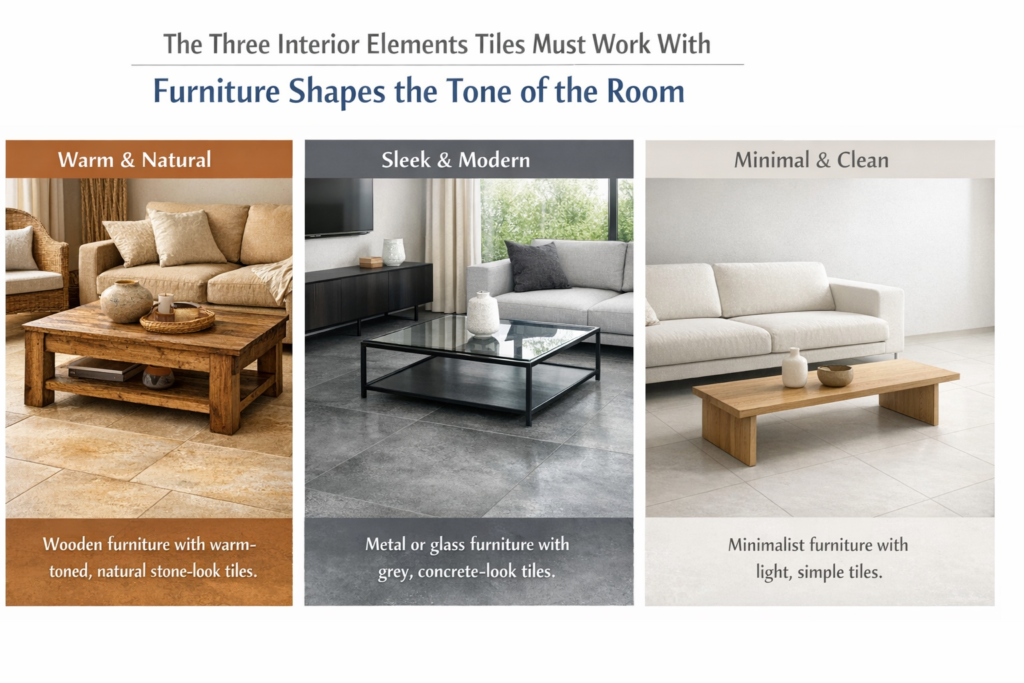
Furniture Shapes the Tone of the Room
Furniture is often the first thing people notice in a space. Its material, color, and design style naturally influence which tiles will look balanced in the room.
For example:
- Wooden furniture usually carries warm tones and natural textures. Tiles with warm shades such as beige, soft brown, or natural stone looks often complement this style well.
- Modern metal or glass furniture tends to suit cleaner and more neutral surfaces. Grey, concrete look, or subtle stone inspired tiles often work well in these interiors.
- Minimalist furniture designs usually benefit from calm and simple tile surfaces that do not distract from the clean look of the space.
The goal is not to make tiles the center of attention, but to ensure they support the character created by the furniture.
Wall Surfaces and Tiles Must Feel Connected
In many interiors, floors and walls cover the largest visual areas. When they feel disconnected, the room can appear unplanned. But when they relate to each other, the space becomes more comfortable and visually balanced.
This connection can be created in simple ways:
- Using similar color families between wall finishes and tiles
- Combining different textures within the same tone range
- Introducing controlled contrast where one surface is slightly darker or lighter than the other
The idea is not that floors and walls must look identical. Instead, they should feel like parts of the same interior language.
Lighting Changes How Tiles Look
Lighting can significantly influence how tile colors and textures appear in a room. A tile that looks perfect in a showroom may look slightly different once installed at home because the lighting environment changes.
Natural light, for example, can make tiles appear:
- Warmer during morning sunlight
- Cooler during cloudy conditions
- Brighter in open spaces
- More textured when light falls across the surface
Artificial lighting also plays a role. Warm indoor lighting can soften tile colors, while cooler lighting can highlight patterns and surface textures.
Floor Tiles and Wall Tiles Should Not Compete for Attention
In interior design, balance plays an important role in how comfortable a space feels. When both the floor tiles and wall tiles are visually strong at the same time, the room can start to feel heavy or crowded. Too many bold patterns, textures, or colors across large surfaces may distract the eye and make the interior appear less organized.
A more balanced approach is to allow one surface to stand out while the other remains calm and supportive. This helps the space feel structured and easier to experience visually. Designers often follow simple combinations to achieve this harmony.
Some common balanced approaches include:
Neutral floor tiles with expressive wall tiles: When the floor remains simple and calm, the walls can carry a feature design, pattern, or decorative tile without overwhelming the room.
Textured floor tiles with calm wall surfaces: A textured floor can add depth and interest, while plain or lightly finished wall tiles maintain visual balance.
Stone look floor tiles with subtle wall finishes: Natural stone inspired floors already bring character to the room, so pairing them with soft and understated wall tiles keeps the interior comfortable and refined.
How Tile Size Affects Interior Balance
Large Tiles
Large format tiles are widely used in modern interiors because they create a clean and continuous surface. With fewer grout lines, the floor or wall appears smoother and less visually interrupted.
Key characteristics of large tiles include:
- Fewer grout lines, which creates a more seamless appearance
- A clean and open visual surface that helps rooms look more spacious
- Often used in modern living rooms, open interiors, and contemporary designs
Because of their larger coverage, these tiles can make the interior feel more expansive and organized.
Medium Tiles
Medium sized tiles offer a balanced approach between practicality and design flexibility. They are often suitable for a wide variety of interior spaces and layouts.
Common advantages of medium tiles include:
- Adaptability for many room sizes and layouts
- Generally easier installation compared to larger tiles
- Suitable for both floors and walls in residential interiors
This size works well when a space requires visual balance without being overly minimal or overly detailed.
Small Tiles
Small tiles bring a different character to interiors by adding detail, texture, and pattern. Instead of creating a continuous surface, they introduce visual rhythm through grout lines and tile arrangements.
They are often used for:
- Feature walls or accent areas
- Kitchen backsplashes
- Mosaic designs in bathrooms or decorative spaces
Because small tiles create more visible patterns, they are usually used in focused areas rather than across large floor surfaces. This helps maintain balance while still adding design interest to the interior.
Relationships Between Tile Colour and Furniture
The colour of tiles plays an important role in how well an interior feels connected to the furniture placed within it. Since tiles usually cover large surfaces such as floors and walls, their colour can either support the overall interior or unintentionally overpower it. For this reason, many interiors rely on neutral tile tones, as they tend to work well with a wide variety of furniture styles.
Some practical colour relationships often seen in balanced interiors include:
Beige tiles with wooden furniture
Beige or warm toned tiles often complement wooden furniture beautifully. The natural warmth of wood pairs well with soft earthy tile tones, helping create a comfortable and welcoming interior atmosphere.
Grey tiles with modern furniture styles
Grey tiles are commonly used in contemporary interiors because they work well with modern furniture materials such as metal, glass, and minimalist finishes. The neutral grey tone helps maintain a clean and structured look.
Soft white tiles with Scandinavian interiors
Scandinavian inspired spaces often focus on light, simplicity, and natural materials. Soft white or light neutral tiles help maintain this bright and calm environment while allowing light colored furniture and natural wood elements to stand out.
The Role of Texture in Interior Design
Different tile textures contribute to interiors in unique ways:
Matte tiles create calm interiors
Matte surfaces absorb more light and reduce reflections. This often results in a softer and more relaxed atmosphere, making matte tiles a popular choice for living rooms, bedrooms, and modern interiors where subtlety is preferred.
Polished tiles reflect light
Polished or glossy tiles reflect natural and artificial light more strongly. This reflective quality can make spaces feel brighter and more open, especially in areas where light needs to travel across the room.
Textured tiles add depth
Tiles with textured surfaces introduce small variations that catch light differently throughout the day. This creates visual depth and can make walls or floors appear more dynamic without using bold colours or patterns.
Designing the Best Living Room Tiles Design with Balance
The living room is often one of the most frequently used spaces in a home. It is where families gather, guests are welcomed, and everyday activities take place. Because of this, the tiles used in living rooms should balance comfort, durability, and visual calm, ensuring the space feels both practical and inviting.
One common approach in modern interiors is the use of large format tiles, which help create a more open and continuous floor surface. With fewer grout lines, the living room can appear more spacious and organized. Many interiors also favor natural stone inspired tile designs, as they provide a timeless look while remaining versatile enough to work with different furniture styles. In addition, subtle patterns or soft textures can help support furniture layouts without drawing too much attention away from the seating areas or decorative elements.
Bringing It All Together with Tree Tile: Designing Interiors That Feel Complete and Connected
At Tree Tile, the idea is simple; tiles should support the room, not dominate it. Whether you opt for tiles for living room floor or explore wall tile designs for the living, the balance between wall tiles and floor tiles, furniture, and interior style matters. From large-format tiles based on the size of the room to mosaic tiles or carpet tiles, the right tile options help shape a dynamic living room or luxury living room.
A thoughtful tiles collection includes ceramic or porcelain tiles, terracotta tiles, rectangular tiles, and room wall tile designs across a wide range of tiles available today. These popular tiles, tiles inspired by natural materials, and different finish tiles suit design preferences in a living room or hall and support different interior styles.
When selected well, tiles can be used to redefine your living space. Tiles are durable, tiles are highly durable, and tiles are easy to maintain, tiles are great for everyday use. As tiles are made for both function and design, the right tiles for room ensure a calm, cohesive, and complete interior.
The Tile Decision Test: A 10 Second Check Before You Finalize Your Space
Before you finalize your tiles, ask yourself:
- Do these tiles quietly support my furniture and interior style?
- Do my wall tiles and floor tiles feel connected or separate?
- Does the tile look the same in my home lighting as it did in the showroom?
- Is the tile helping create a calm space or making it visually heavy?
- Will I still like this tiles collection after years of everyday use?
If most answers are “yes” → you’re on the right track.
If not → rethink before installation.
Good interiors are not created by adding more — they are created by choosing better. Tiles are where that choice begins.