

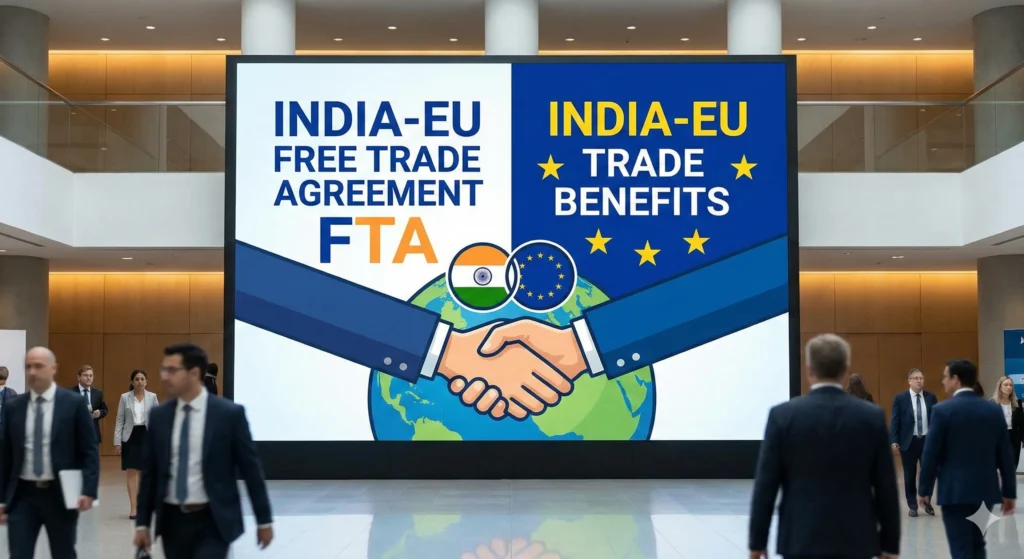
This article is written from the perspective of Tree Tile, an Indian ceramic tile manufacturer with strong export expertise and international market experience. Recognized by the Government of India as a One Star Export House, Tree Tile has built credibility through consistent quality and global trade engagement. As discussions around the EU India Free Trade Agreement and the evolving India EU trade deal continue, Tree Tile closely follows these developments because they directly impact tile exports, pricing, and long term trade opportunities. For us, this free trade agreement is not just policy, it is about the future of Indian tile exports and global trade relations.
Here’s why it matters:
- Why This Trade Deal Matters to a Tile Manufacturer in India
- What Is the EU-India Free Trade Agreement
- When Did the EU India Trade Deal Start?
- Why Is India and The EU Trade Deal Important Now?
- What Does the EU-India Free Trade Agreement Include?
- Who Benefits From This Free Trade Agreement?
- What About the Indian Tile Industry?
- What This Means Specifically for Tree Tile
- Latest News and Current Status
- Challenges That Still Remain
- Simple Summary – What Readers Should Remember
- Bringing It All Together: India-EU Trade and What It Means
- Bonus Insight: What This Trade Deal Could Mean for Indian Tile Exporters
Why This Trade Deal Matters to a Tile Manufacturer in India
Imagine a ceramic tile manufactured in India and shipped to a buyer in Europe. Today, its final price is influenced not only by design and quality, but also by import duties, logistics costs, and regulatory requirements. Even small trade barriers can affect competitiveness in a price sensitive global market.
If the EU India Free Trade Agreement reduces certain duties or simplifies procedures, the same tile could enter Europe with better pricing advantage and smoother access. For export focused manufacturers like Tree Tile, such changes directly impact growth, planning, and long term market strategy.
Europe remains an important destination for Indian tiles due to its strong demand for quality and design. That is why the India EU trade deal is more than policy; it could shape the future of Indian tile exports and global trade relations.
What Is the EU-India Free Trade Agreement
A Free Trade Agreement is an understanding between two sides to reduce or remove taxes on goods they buy and sell to each other. It helps make trade smoother, simpler, and more affordable.
In this case, the agreement is being discussed between India and the European Union. The European Union (EU) is a group of 27 European countries that trade together under common rules.
The main goal of the EU India Free Trade Agreement is simple: make buying and selling between India and Europe easier, faster, and more cost effective for businesses and consumers.
When Did the EU India Trade Deal Start?
The idea of a free trade agreement between India and the European Union first took shape in 2007, when formal negotiations began. For several years, both sides discussed market access, tariffs, and trade rules.
However, in 2013, the talks were paused due to differences on key issues. Talks stopped. Years passed. Trade continued, but without a finalized agreement.
After nearly a decade, negotiations officially restarted in June 2022. Since then, multiple negotiation rounds have been held between 2022 and 2024, with leaders from both sides expressing their intention to conclude the discussions. As of the latest updates, the agreement is still under negotiation, and discussions are ongoing.
Why Is India and The EU Trade Deal Important Now?
The European Union is one of India’s largest trading partners, and trade between the two has grown steadily over the years. At the same time, India has emerged as a fast growing manufacturing hub, supplying goods to markets across the world.
Both sides are now looking to build stronger and more reliable supply chains. Recent global disruptions have shown the risk of depending too heavily on a single market. By strengthening trade ties, India and the EU aim to create more balanced and stable business relationships.
There is also a shared focus on clean technology, sustainable production, and long term manufacturing growth. In simple terms, this trade deal is about building stronger business connections between two large and important markets.
What Does the EU-India Free Trade Agreement Include?
The agreement mainly focuses on making trade smoother and more predictable between India and the European Union. It includes:
Reduction or removal of import duties on selected goods
Easier market access so businesses can sell products with fewer barriers
Protection for businesses and investors to improve confidence in cross border trade
Cooperation on sustainability and standards, including environmental and regulatory practices
Improved movement of professionals in certain sectors under agreed conditions
Who Benefits From This Free Trade Agreement?
Indian Manufacturers
Potentially lower tariffs when exporting goods to Europe
Access to a larger customer base across 27 EU countries
Improved price competitiveness in European markets
European Importers
Access to cost effective and quality Indian products
More sourcing options for their businesses
Small and Medium Businesses
Easier entry into new international markets
Greater trade clarity and stability for long term planning
Consumers
Wider product choices
More competitive pricing due to reduced trade barriers
What About the Indian Tile Industry?
Europe is an important market that imports ceramic tiles for residential and commercial projects. At the same time, India has become one of the world’s leading tile exporters, supplying products to many global destinations.
If tariffs are reduced under the EU India Free Trade Agreement, Indian tile exporters could gain better access to European markets. Lower duties may improve pricing flexibility and are expected to improve competitiveness compared to other exporting nations. Faster and smoother trade procedures could also support more reliable supply chains.
What This Means Specifically for Tree Tile
For Tree Tile, the discussion around the EU India trade deal is closely connected to long term export planning. European markets are known for strict quality standards, environmental expectations, and design sensitivity. Any improvement in trade conditions would still require manufacturers to consistently meet these requirements.
Tree Tile continues to focus on quality control, sustainable production practices, and adaptable designs suited to international preferences. If trade becomes smoother under the EU India Free Trade Agreement, companies that are already aligned with global standards may find stronger opportunities in European markets.
Rather than viewing the agreement as a shortcut, Tree Tile sees it as a potential step toward stable, long term export growth built on compliance, reliability, and design strength.
Latest News and Current Status
Negotiations for the EU India Free Trade Agreement are ongoing, with multiple rounds of discussions held since talks resumed in 2022. Both India and the European Union continue to engage on key trade matters, including tariffs, standards, and market access.
Leaders from both sides have publicly expressed their commitment to move toward concluding the agreement. However, the deal has not yet been finalized, and discussions are still in progress as negotiators work through remaining issues.
Challenges That Still Remain
Although significant progress has been made, a few important areas required detailed discussions before the agreement could move forward.
Differences on tariffs: Both sides had to carefully negotiate how much and how quickly duties would be reduced across different product categories.
Standards and regulations: Aligning quality standards, safety rules, and certification processes has been an important part of the discussions.
Environmental compliance: Sustainability and climate related commitments have played a key role, especially given the EU’s strict environmental policies.
Services sector discussions: Matters related to professional mobility and services trade have also required careful negotiation.
Addressing these challenges has been essential to ensure that the agreement remains balanced and beneficial for both India and the European Union.
Simple Summary – What Readers Should Remember
Negotiations between India and the EU first began in 2007
Talks were paused and later resumed in 2022
The agreement aims to reduce trade barriers and import duties
It can support manufacturers, including Indian tile exporters
The deal has been politically concluded, with formal approval processes underway
Bringing It All Together: India-EU Trade and What It Means
Trade agreements are signed on paper, but their impact reaches factories, workers, designers, export teams, and homes across continents. The EU India Free Trade Agreement (FTA), politically agreed in 2026, represents an important step in strengthening trade between the EU and India. This free trade deal focuses on trade in goods, selected goods and services, and cooperation on trade and sustainable development, aiming to reduce tariffs, including certain EU tariffs, and support long term economic interests and economic security.
The agreement was shaped over years of discussion, with progress at times slowing due to disagreements. Now that the free trade agreement concluded at the political level, it will move through formal procedures before it can come into force. Once implemented, it is expected to encourage smoother Indian trade, expand exports to India and Europe, and create new opportunities for commerce and industry.
The EU India Free Trade Agreement is not just about policy. It is about opportunity for manufacturers, for exporters, and for companies like Tree Tile looking beyond borders.
Bonus Insight: What This Trade Deal Could Mean for Indian Tile Exporters
If the agreement fully comes into force, here’s what could realistically improve:
Lower or phased reduction of EU tariffs on selected tile categories
More predictable trade procedures
Faster customs clarity
Stronger India EU trade relations
Better long term export planning
Increased confidence for European buyers sourcing from India
But success will still depend on:
Meeting EU quality standards
Environmental compliance
Competitive pricing
Design adaptability
Trade policy may open doors.
Quality keeps them open.