

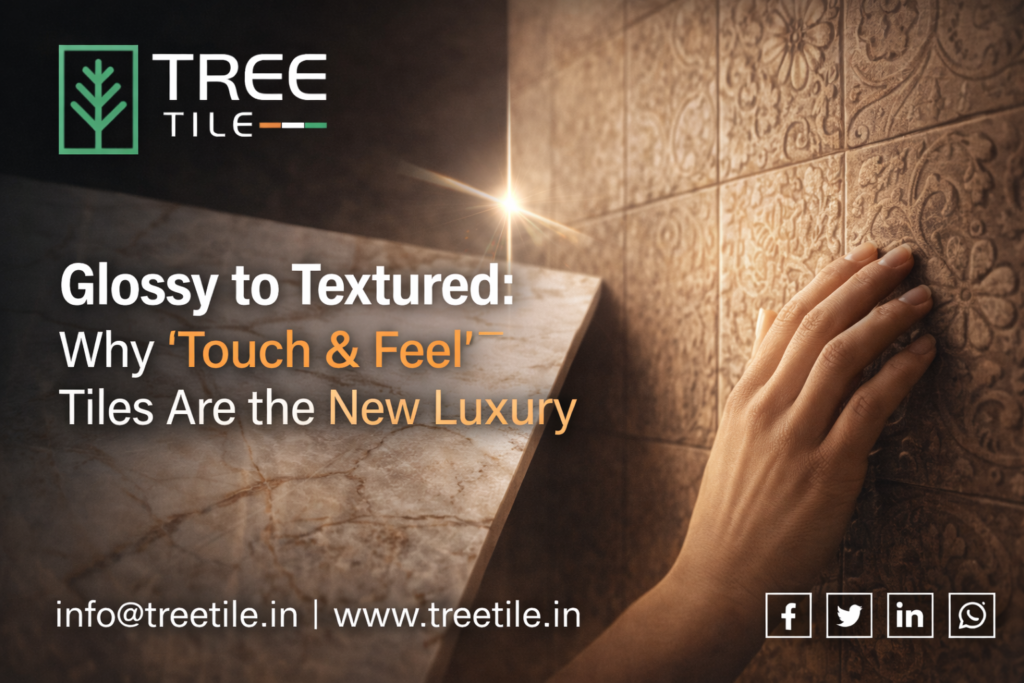
For years, “luxury” tiles meant high gloss and mirror like shine. Now the focus has shifted to how surfaces feel under hand and foot, not just how they look. Matte, satin, carved, and textured porcelain tiles create softer light, better grip, and richer depth in modern kitchen interiors. This guide explains how glossy, matte, and textured finishes differ, why tactile tiles are the new quiet luxury, and how to choose the right “touch and feel” surfaces for your home or project.
Most of us grew up with one simple rule in mind: more shine means more luxury. Polished marble floors, glossy wall tiles, and reflective surfaces were the default choice for high end homes and hotels.
In 2026, that rule is changing fast. Interior trends are moving toward calmer, softer, more tactile spaces where you notice how a surface feels as much as how it looks. Designers talk about layering textures, not only adding more gloss.
Porcelain tiles now come in a wide range of finishes, from high gloss marble looks to soft matte, stone like textures, carved patterns, and wood grain surfaces that invite you to touch them.
At Tree Tile, we design finishes across this full spectrum, including glossy designs, ultra matte looks, wood feel planks, and carving tile collections for luxury walls.
What Has Changed From Glossy To “Touch And Feel” Luxury?
Luxury used to mean bright, shiny, and reflective. Today, luxury is more about how a space makes you feel, which includes the textures you touch and the way surfaces play with light instead of bouncing it back like a mirror.
Design reports highlight a shift toward sensory interiors that use soft textures, layered materials, and warmer finishes to create calm, grounded rooms.
In this new approach, tiles are not just a background; they are an integral part of the overall design. They become one of the easiest ways to add depth and character through matte, stone touch, carved, and wood look surfaces on floors and walls.
That is why you will see more designers choosing textured porcelain in luxury bathrooms and living rooms, and using high gloss more carefully as an accent instead of covering every wall and floor with it.
Glossy, Matte And Textured Tiles: What Is The Real Difference?
Glossy tiles have a smooth, reflective surface that catches and bounces light, which can make small kitchen rooms look brighter and larger.
Matte tiles have a non reflective surface that feels softer to the eye, hides small marks better, and often provides more grip underfoot than high gloss finishes.
Textured tiles add a physical pattern or relief that you can see and feel, such as stone grain, carved lines, concrete texture, or wood knots. This creates more visual depth and a stronger sense of touch in the bathroom design.
Glossy Tiles
Glossy tiles are great for adding drama and light bounce in living rooms, feature walls, and some kitchen backsplashes.
They work well on walls where you want a premium shine or marble effect, and where direct foot contact and slip risk are not a concern.
However, glossy finishes can show smudges, water spots, and fine scratches more easily, especially in high touch areas like kitchen backsplashes.
On floors, glossy tiles tend to be more slippery when wet, which is why many experts caution against using them in bathrooms, balconies, or entrance zones.
Matte Tiles
Matte tiles are more forgiving in everyday life. They do not reflect harsh light, they hide small marks better, and they often feel more relaxed and modern in living spaces.
Because the surface is not polished, matte tiles can offer better friction underfoot, which helps in wet or moisture prone areas like kitchens and family bathrooms.
Designers also like matte finishes because they work very well with warm lighting and natural materials such as wood, metal, and fabric, which is a big part of the current “quiet luxury” look.
Textured Tiles
Textured tiles take this one step further. They introduce a three dimensional feel and stronger tactile experience on walls and floors, from stone look ridges to carved lines and wood grain.
In luxury bathrooms and spas, textured tiles on walls or floors create depth, break up flat surfaces, and improve grip where water is present, enhancing the overall design.
Modern textured porcelain is also designed to be cleanable, so you get the character and grip without the heavy maintenance that older rough surfaces sometimes required.
Tree Tile explores this direction through its Carving tile trends for 2026 will emphasize texture and innovative designs. and wood look plank formats like 20×120 cm tiles.
Why Are Textured Tiles Becoming A Symbol Of Modern Luxury?
Textured tiles feel luxurious because they make surfaces look crafted, not flat. Light falls differently across raised and recessed areas, which creates natural shadows and a layered effect that feels more premium than a single shiny plane.
Luxury bathrooms now often use textured tiles behind the vanity or shower area to create a focal wall that feels like carved stone or designer paneling, while still giving the benefits of porcelain.
Texture also fits perfectly with wellness and spa inspired design, where people want bathrooms that feel warm, calm, and comfortable instead of cold or overly reflective.
Industry trend reports say that 2025 interiors are “feeling first,” which means designers are choosing materials by hand feel and atmosphere, not only by catalog photos. Tiles with stone, fabric, or wood like textures play a big role in that shift in kitchen design.
At Tree Tile, we see this same trend in demand for carved, fluted, and stone touch collections for living rooms and bathrooms, where clients want walls and floors that feel rich when you run your hand across them.
Touch, Feel, And Everyday Use: Safety And Maintenance Benefits
Matte and textured tiles do not just look natural and premium. They also improve real world safety and maintenance in many spaces.
In bathrooms, balconies, entrance lobbies, and kitchens, a slightly rough or structured surface can provide more grip when the floor is wet, which reduces the risk of slips compared to very smooth, glossy tiles.
Matte finishes hide footprints, water spots, and small scratches better than high gloss surfaces, which helps busy households and high traffic areas like kitchens stay presentable with normal cleaning.
Modern textured porcelain also balances grip with cleanability. Many new luxury textures are engineered so that everyday dirt can be cleaned without extreme effort, unlike older heavily rough tiles that trapped grime in deep pores.
This combination of touch, safety, and easy care is a big reason why textured and matte tiles are now used in premium bathroom projects, not just practical ones.
If you want to check performance along with finish, Tree Tile’s tile quality checklist is a good starting point for comparing samples.
Where Do Glossy Tiles Still Make Sense?
Glossy tiles still have a strong place in interior design, especially when used in the right areas and in combination with softer textures.
Glossy wall tiles work very well for feature walls, backsplashes, and accent areas where you want reflections, depth, and a more dramatic look without slip risk.
They are also useful in small or dark spaces where you want to bounce light around, such as compact kitchens or corridors that benefit from extra brightness.
The key is to keep glossy finishes mostly on walls and low risk dry areas, then pair them with matte or textured floors in the same color family for balance.
For example, a glossy marble effect wall in the living room can look beautiful with a large format matte floor from the same series, which is exactly the type of combination Tree Tile explores in its living room tile design ideas.
Using gloss as a highlight and texture as the base helps you get the visual drama of traditional luxury with the comfort and practicality of modern surfaces.
How To Choose The Right “Touch And Feel” Tile For Your Project
The best way to choose finishes today is to start with the feeling you want in each room, then match that to finish, texture, and size.
For a spa like bathroom, you might choose soft matte stone look tiles on the floor, a textured or carved feature wall behind the vanity, and a subtle satin finish in the shower where more grip is needed.
In a living room, a large format matte porcelain floor can create a calm, seamless base, while a textured wall tile or wood look plank adds warmth and a natural touch.
For kitchens, a combination often works best: matte or subtle texture on the floor for safety and easy cleaning, with a glossy or satin backsplash that adds light and contrast above the counter.
Outdoors or on balconies, structured or lightly textured tiles are usually safer and more durable, especially when water and dust are part of daily life.
Tree Tile makes this selection easier by grouping porcelain products by size, finish, and application across its types of tiles guide, trending tile collections, and Tile catalogues now feature a range of textures and gloss finishes for various design styles..
You can explore glossy, matte, wood, stone, and carving tiles in one place, then work with our team to choose the right “touch and feel” combination for each room.
Modern luxury is not only what you see in a photo. It is what you feel when you walk barefoot across the floor, lean against a wall, or run your hand over a surface. Tiles are one of the most powerful tools you have to create that feeling every day.
If you want to design spaces that feel as good as they look, explore Tree Tile’s latest finishes, order samples, and contact our tile team to plan your next project around “touch and feel,” not just shine.
Frequently Asked Questions
What is the difference between glossy, matte, and textured tiles?
Glossy tiles have a smooth, reflective surface that bounces light and creates a bright, polished look. Matte tiles have a non reflective finish that feels softer and usually hides marks better. Textured tiles add a physical pattern or relief that you can see and feel, which brings more depth and grip to floors and walls.
Are textured tiles harder to clean than glossy tiles?
Modern textured porcelain tiles are designed so that daily dirt can still be cleaned with normal methods, even though the surface has more character. Older very rough tiles could trap grime, but newer luxury textures balance grip and cleanability, especially in bathroom and living applications.
Which tile finish is best for luxury bathrooms and living rooms?
For luxury bathrooms, a mix of matte and textured tiles often works best, with texture on feature walls or floors where you want more character and grip. For living rooms, large format matte or soft satin floors paired with a carved or textured accent wall create a modern, high end look that feels calm and premium.
Can I mix glossy and textured tiles in the same room?
Yes, mixing finishes can look very refined when done in a planned way. A common approach is to use glossy tiles for feature walls or backsplashes in the kitchen, and use matte or textured tiles on floors or main surrounding walls in the bathroom. This keeps the room comfortable and safe while still giving you highlight areas that catch the eye.
Do matte and textured tiles really make floors safer in wet areas?
Matte and textured tiles can improve grip compared to very smooth glossy surfaces, especially in bathrooms, balconies, and kitchen zones where water and spills are common. Many brands recommend anti slip or structured tiles for wet or outdoor areas, and real world experience supports this as a safer choice than high gloss on floors.