

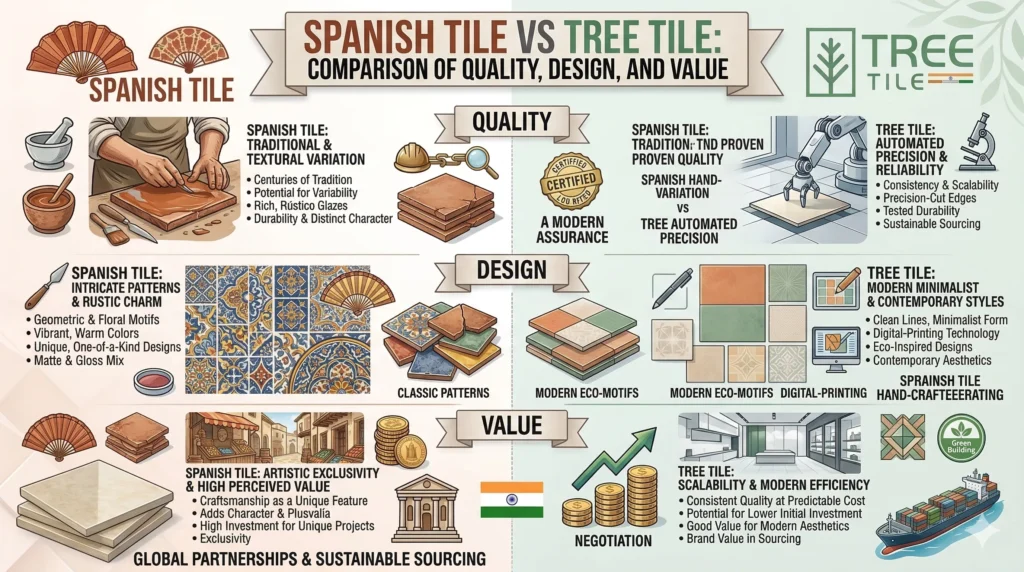
Spanish Tile vs Tree Tile: Durability Comparison of Ceramic, Porcelain, and Modern Indian Tiles
- Why Comparing Tiles Today Requires a New Perspective
- What People Usually Expect from Spanish Tiles
- Who Is Tree Tile? A Modern Tile Brand Built on Practical Durability
- Ceramic vs Porcelain Tiles: The Material That Defines Durability
- Spanish Tile vs Tree Tile: Comparing Durability
- Design Technology: How Modern Tiles Are Created Today
- Where Tree Tile Focuses Differently
- Choosing Between Spanish Tile and Tree Tile: What Buyers Should Consider
- A Practical Perspective on Spanish Tile vs Tree Tile
- Final Thoughts by Tree Tile: Tiles Should Be Judged by Performance, Not Labels
- FAQs
- Bonus Insights: What Most Tile Articles Don’t Tell You
In conversations about Spanish Tile vs Tree Tile, the focus often shifts to country reputation, but the real discussion should be about durability, material quality, and practical performance in modern spaces. Tree Tile represents a new generation of Indian tile expertise, specializing in durable ceramic and porcelain tiles designed for real homes and architectural projects. With a perspective rooted in manufacturing understanding, usability, and consistent quality, Tree Tile focuses on creating tiles that balance strength, design, and long term reliability. Reflecting its growing international presence and commitment to global standards, Tree Tile has also been recognized by the Government of India with the prestigious One Star Export House status, marking an important milestone for the company in the evolving world of modern tiles.
Why Comparing Tiles Today Requires a New Perspective
Tile buyers today are more informed than ever before. Instead of choosing tiles based only on a country’s reputation, people now look deeper into material quality, durability, manufacturing precision, and long term performance. These factors help determine how well a tile will actually perform in homes and commercial spaces over time.
When people explore Spanish tiles, they often associate them with European design heritage and traditional craftsmanship. However, modern manufacturers like Tree Tile represent a new generation of tile expertise that focuses strongly on durability, material understanding, and practical design suited for today’s living spaces. Looking at tiles from this perspective helps create a more meaningful comparison between Spanish Tile and Tree Tile, focusing on performance rather than just reputation.
What People Usually Expect from Spanish Tiles
When people think about Spanish tiles, they often associate them with a long tradition of decorative design, architectural influence, and ceramic craftsmanship. Spain has built a reputation in the tile industry through distinctive styles, artistic patterns, and strong design aesthetics that are widely used in residential and architectural projects.
Spanish tile brands are also often positioned with premium European branding, which appeals to buyers who value heritage inspired design. Many Spanish manufacturers focus on design oriented ceramic and porcelain tile collections, offering surfaces that emphasize visual appeal and architectural character. Understanding this background helps create a balanced perspective when comparing Spanish tiles with modern manufacturers like Tree Tile, where durability, material performance, and practical usability are equally important considerations.
Who Is Tree Tile? A Modern Tile Brand Built on Practical Durability
Tree Tile represents a modern tile brand focused on creating ceramic and porcelain tiles designed for real living spaces. The company’s approach combines material understanding with practical design, ensuring that tiles are not only visually appealing but also reliable for everyday use. With expertise in ceramic and porcelain tile manufacturing, Tree Tile emphasizes durability, usability, and consistency, making its collections suitable for contemporary homes and architectural projects.
Along with design and material expertise, Tree Tile has also established a growing global export presence, supplying tiles to international markets. Reflecting its commitment to quality and international trade standards, Tree Tile has been recognized by the Government of India with the prestigious “One Star Export House” status, an achievement that highlights the company’s credibility and performance in the global tile industry.
Ceramic vs Porcelain Tiles: The Material That Defines Durability
| Feature | Ceramic Tiles | Porcelain Tiles |
|---|---|---|
| Basic Material | Made from natural clay and common minerals | Made from refined clay mixed with minerals like feldspar and silica |
| Manufacturing Process | Fired in kilns at moderate temperatures | Fired at higher temperatures, making the tile denser |
| Durability | Durable for walls and light flooring areas | Highly durable and suitable for heavy traffic flooring |
| Water Absorption | Higher water absorption compared to porcelain | Very low water absorption, making it moisture resistant |
| Best Applications | Interior walls, backsplashes, low traffic floors | Floors, kitchens, bathrooms, outdoor areas, commercial spaces |
| Design Variety | Available in many colors, patterns, and finishes | Also offers wide design options including stone, marble, and wood effects |
| Installation | Easier to cut and install due to softer structure | Harder and denser, so installation may require stronger tools |
Spanish Tile vs Tree Tile: Comparing Durability
| Durability Factor | Spanish Tiles | Tree Tile |
|---|---|---|
| Material Quality | Spanish manufacturers commonly use ceramic and porcelain materials with clay and mineral compositions designed for decorative and architectural applications. | Tree Tile also produces ceramic and porcelain tiles using carefully selected clay and mineral compositions, focusing on tiles suitable for modern residential and architectural spaces. |
| Firing Process | Spanish tiles are fired in kilns at temperatures suited to the tile type, influencing density and durability. | Tree Tile uses controlled kiln firing processes to ensure tiles achieve the required hardness and structural strength. |
| Water Absorption | Porcelain tiles from Spanish manufacturers typically have low water absorption, making them suitable for moisture prone areas like bathrooms and kitchens. | Tree Tile’s porcelain tiles are designed with low water absorption properties, supporting use in areas exposed to moisture such as bathrooms, kitchens, and certain outdoor spaces. |
| Suitability for High Traffic | Durable porcelain surfaces can handle frequent foot traffic in residential and commercial settings. | Tree Tile porcelain tiles are designed to maintain surface strength and durability in commonly used areas of homes and projects. |
| Manufacturing Precision | Many Spanish manufacturers focus on precise tile sizing and finishing to support quality installation. | Tree Tile emphasizes calibration, rectified edges, and dimensional consistency, helping tiles align well during installation and maintain long term stability. |
Design Technology: How Modern Tiles Are Created Today
Digital Inkjet Printing
Modern tiles are produced using high precision digital printing technology that allows detailed patterns to be applied directly onto the tile surface. This technology creates highly realistic designs and also allows slight pattern variations so tiles look more natural instead of repetitive.
Natural Stone and Material Simulations
With advanced printing and glazing techniques, tiles can now replicate the appearance of marble, granite, wood, or natural stone. This allows homeowners and designers to enjoy the beauty of natural materials while benefiting from the durability and low maintenance of ceramic and porcelain tiles.
Textured Surfaces for Visual Depth
Modern tiles often feature textured finishes that add depth and character to the surface. These textures can also improve grip in certain applications, making them useful in spaces like bathrooms, balconies, or living areas where both design and functionality matter.
Large Format Tiles for Seamless Spaces
Large format tiles have become popular in modern architecture because they create clean, spacious looking surfaces with fewer grout lines. This style works well in contemporary homes, giving floors and walls a more continuous and elegant appearance.
Where Tree Tile Focuses Differently
While many tile brands focus heavily on design trends alone, Tree Tile approaches tile manufacturing with a balanced perspective where durability, practicality, and design work together. The goal is not only to create tiles that look good in a showroom, but tiles that perform reliably in everyday spaces.
Tree Tile’s approach can be understood through a few key priorities:
Durable Ceramic and Porcelain Materials
Tree Tile focuses on producing ceramic and porcelain tiles designed for strength and long term durability, ensuring that surfaces maintain their quality even with regular use.
Designs for Contemporary Homes
Modern homes require tiles that complement clean architectural styles and practical living environments. Tree Tile develops designs that align with contemporary interiors while maintaining timeless appeal.
Practical Everyday Usability
Beyond appearance, Tree Tile emphasizes tiles that are easy to maintain, suitable for different spaces, and reliable for daily living, making them practical for residential and architectural projects.
Quality Standards for Global Markets
With a growing international presence, Tree Tile follows quality practices suitable for export markets, ensuring consistent manufacturing and dependable performance.
At its core, Tree Tile’s focus remains on reliability and long term performance, creating ceramic and porcelain tiles that are designed not only for visual appeal but also for real world use over time.
Choosing Between Spanish Tile and Tree Tile: What Buyers Should Consider
When comparing Spanish Tile vs Tree Tile, the most important step for buyers is to evaluate how the tile will actually be used in their space. A well chosen tile should match the function of the area, expected usage, and design preference, rather than being selected only based on brand or origin.
Here are a few practical factors buyers should consider:
Where the Tile Will Be Used (Wall vs Floor)
Wall tiles and floor tiles serve different purposes. Floors require stronger and more durable tiles, while wall tiles can prioritize lighter materials and decorative finishes.
Expected Foot Traffic
Areas like living rooms, hallways, and commercial spaces experience frequent foot traffic, so tiles used here should have higher surface strength and wear resistance.
Moisture Exposure
Bathrooms, kitchens, and balconies often face moisture and water exposure. In such areas, tiles with low water absorption, especially porcelain tiles, are generally more suitable.
Tile Material
Understanding whether the tile is ceramic or porcelain helps buyers determine its durability, density, and suitability for different environments.
Design Preference
Tiles also contribute significantly to the overall appearance of a space. Buyers often consider color, texture, and pattern to ensure the tile complements the interior style.
Installation Requirements
Tile size, edge finishing, and dimensional consistency can influence how easily tiles are installed and how seamless the final surface appears.
Ultimately, the best tile is the one that matches the needs of the space and how it will be used, combining durability, functionality, and design in a balanced way.
A Practical Perspective on Spanish Tile vs Tree Tile
When looking at Spanish Tile vs Tree Tile, it is helpful to understand what each represents in the modern tile market.
Spanish tiles are widely recognized for their strong design heritage and European architectural influence. Many Spanish collections focus on artistic patterns, decorative styles, and surfaces that reflect a long tradition of ceramic craftsmanship.
On the other hand, Tree Tile represents a modern manufacturing approach that emphasizes durable ceramic and porcelain tile solutions designed for practical everyday spaces. With a growing international export presence, Tree Tile focuses on tiles that combine reliable performance with designs suited for contemporary homes and projects.
Today, both exist within the same global tile industry, but buyers are increasingly making decisions based on material quality, durability, and usability, rather than relying only on brand origin or geographic reputation.
Final Thoughts by Tree Tile: Tiles Should Be Judged by Performance, Not Labels
At Tree Tile, we believe tiles should be chosen for how well they perform, last, and enhance everyday spaces. Our wall and floor tiles combine durability with thoughtful design, helping surfaces withstand heavy foot traffic, moisture and stains while maintaining an elegant look. From rustic and terracotta inspirations to vibrant colors and intricate designs, our collections include options for bathroom tiles, patios, kitchen backsplashes, statement walls, floors or walls, and more. Each tile offers a balance of global design, affordability, and durability, allowing homeowners to combine style and function in their interior design.
If you are exploring Spanish ceramic styles or installing Spanish tiles, Tree Tile provides modern alternatives that stand the test of time. Our tiles bring bold colors, visual impact, and warmth to every corner of your home, whether for a courtyard, countertops, or spaces that need a bold design statement. With best prices and best quality, our expert team is always ready to guide you in choosing tiles suitable for every home. Contact us anytime for assistance, and explore our collections on our website to find tiles that add warmth and personality and last for decades.
FAQs
Are Spanish tiles more durable than other tiles?
Durability depends on the tile material and manufacturing process rather than the country alone.
What tiles are stronger: ceramic or porcelain?
Porcelain tiles are typically denser and more durable than standard ceramic tiles.
What type of tiles does Tree Tile produce?
Tree Tile focuses on ceramic and porcelain tiles designed for modern residential and architectural spaces.
Why are porcelain tiles considered durable?
They are fired at higher temperatures, making them denser and less porous.
Bonus Insights: What Most Tile Articles Don’t Tell You
The Science Behind Tile Durability
Tile durability depends on how the tile is made, not just where it comes from. Factors such as raw material composition, firing temperature, and tile density play a major role. For example, porcelain tiles are fired at higher temperatures, making them denser and less porous, which improves long term durability.
What Professionals Look for in Tiles
Architects and builders usually evaluate tiles differently from regular buyers. They focus on dimensional accuracy, surface wear resistance, water absorption levels, and edge precision. These factors help ensure the tile performs reliably after installation.
Why Buyers Are Moving Beyond Country Labels
The modern tile industry uses advanced manufacturing technologies worldwide. Because of this, buyers increasingly focus on material quality, durability, and manufacturing standards rather than choosing tiles based only on country reputation.